Powered By Blogger

Monday, 1 February 2016

TONY LEON IN BUSINESS DAY

Tony Leon profile

Mbeki’s race rage — and what he did (not) do about it

BY TONY LEON, 01 FEBRUARY 2016, 05:54
PASSIONATE: Former president Thabo Mbeki at his Johannesburg home where he busies himself with  promoting the continental agenda. Picture: PUXLEY MAKGATHO
PASSIONATE: Former president Thabo Mbeki at his Johannesburg home where he busies himself with promoting the continental agenda. Picture: PUXLEY MAKGATHO

BACK at the dawn of the last century, readers of The Strand Magazine in London lined up in droves to buy the next instalment of the latest Sherlock Holmes adventure, The Hound of the Baskervilles. Author Arthur Conan Doyle and his publisher had hit upon the brilliant marketing strategy of doling out the story in instalments, increasing the appetite of the reader and fattening the bottom line of the magazine. Indeed, in 1901, The Strand sold an unimaginable — by today’s standards at least — 500,000 copies a month.
Appropriate to this age of instant electronic communication, former president Thabo Mbeki is attempting something similar. In weekly postings on Facebook, he is publishing defences of some of the more contentious events from his near-decade at the apex of power in SA.
So far, he has attempted to rebut the so-called "spy saga", which dented the reputations of a troika of African National Congress (ANC) grandees — Mathews Phosa, Cyril Ramaphosa and Tokyo Sexwale. Next, Jeremy Cronin was roasted for his early reference to the so-called "Zanufication of power" and Mbeki’s suppression of debate.
In the last instalment, we were treated to Mbeki’s view of Jacob Zuma’s apparently mischievous, but winning, strategy of painting himself in the colours of a victim.
Mbeki’s detractors await his defence of the real areas of controversy around his rule — literally the A to Z, from AIDS to Zimbabwe. Doubtless these will feature soon.
Diplomatically speaking, Mbeki and I did not enjoy the closest of relationships when we faced off in Parliament less than a decade ago. His disdain for his internal critics was more than matched by his icy detachment for some of those outside the party. Perhaps there’s a future posting on that too.
But for all the past controversies, there might yet be a market for Mbeki nostalgia. For barely a month into the new year, SA’s intelligentsia seems, in the apt words of Politicsweb editor James Myburgh, to have "descended into what can only be described as an era of racial madness".
Reality, consistency, proportion and fairness are, in his view, the collateral damage of the Penny Sparrow, Chris Hart and related affairs and incidents.
The current political conflagration is, however, not as new as it seems. As the governing party and the country gear up for the state of the nation address (Sona), doubtless these race incidents will be top of mind. This leads back to Mbeki at the time of his Sona in 2000. "Gobsmacked" would be the sentiment I felt when, soon after his opening remarks and pleasantries in Parliament, he thought it appropriate to share a racist e-mail penned by an engineer from a KwaZulu-Natal sugar mill.
Mbeki read the racist diatribe in unexpurgated and hateful form, including: "I would like to summarise what the kaffirs have done to stuff up this country since they came into power", and "All I am saying is that AIDS isn’t working fast enough."
Mbeki drew from this venom the conclusion that "many in the country" had reached the "premature conclusion that racism in the country is dead".
Far from it, Mbeki advised Parliament, with another quote, this time from abroad: "The bitch is in heat again."
I opined, in response, that quoting one racially bilious e-mail was hardly proof that its noxious sentiments were widely shared and that, more positively, there were acres of positive examples of racial amity dotting the South African landscape.
What was most striking between that past debate and the outpourings Parliament will doubtless witness a few weeks hence is the difference between the barely suppressed racial fury of Mbeki, on the one hand, and his lack of consequential action or stringent remedies on the other.
Unlike the current spokesman of the ANC in Parliament, Moloto Mothapo, Mbeki did not announce a specific law to "criminalise racism and the promotion of apartheid". He did not declare that the Constitution was imperilled. Instead, he tamely proclaimed that the government and the Human Rights Commission would convene a "national congress against racism".
I forget the achievements of that talk fest, but looking back from today’s vantage point, it was obviously unsuccessful.
Two further reasons suggest themselves as to why Mbeki’s public fury led to few consequences or wider outrage. First, his speech occurred in an antique age: there were no Twitter warriors or trolls to beat the electronic racial tom toms. The second clue lies in the rest of his speech. He drew attention to the huge economic progress SA was experiencing back then. Gross domestic product growth was at more than 4%, the rand-dollar exchange rate was an impressive R6.95, and he arrived in Parliament fresh from a triumphant reception at the World Economic Forum in Davos.
He read to Parliament, with approval, the words of Anglo American chairman Julian Ogilvie Thompson: "Increasingly, (foreign investors) share our assessment that SA is one of the most attractive emerging markets."
Today, of course, Anglo is more a crippled giant than market leader. The currency has crashed more than 100% in value against the greenback in the intervening period; last week, the United Nations Conference on Trade and Development revealed that foreign direct investment had fallen a whopping 74% in just one year. Most critically, the relatively high growth era of the Mbeki years has sharply reversed.
Drawing sweeping conclusions from random and offensive racist utterances is thus hardly novel in our two decades as a democracy. But the poison now, whipped up by the Twitterati, is that it comes at a time of low growth and a bleak economic outlook. Hence its dangers. There appears to be no shortage of expert opinions on how to quarantine racist behaviour and antidotes against it, although some of them will do much violence to our Constitution and rights it asserts.
But as fundamental — and, alas, equally contested — are the necessary, perhaps deeply politically incorrect, remedies for uplifting the country from the low growth trap in which we are ensnared. That debate needs to move urgently to centre stage.
• Leon is a former leader of the opposition. Follow him on Twitter: @TonyLeonS
A

I Defend Thabo Mbeki! - By Mukazo Mukazo Vunda

I Defend Thabo Mbeki!

By Mukazo Mukazo Vunda

The Perspective

November 12, 2001

The effect that the opinions of leading news agencies have had on my psyche, in defaming Thabo Mbeki's stand on the issue of AIDS, became apparent to me when I hesitated in finding a fitting title to this article in defense of him, wishing not to seem associated with his ideas, the reason I wanted to defend him notwithstanding. I chose one title, then dropped it, then another, and, because of this, almost came to the point of giving up, like so many have done.

I never have problems finding catchy titles for my articles.

The realization that I wouldn't be true to myself if I didn't tell of the opinions I share with him, and also knowing, like no other, the power of the written word, made me shake myself free of this grip. I started making notes and as I went along, I became more resolute and freer in my rendering.

Then fear gripped me, the same kind of fear I used to have in my younger days, when I felt naked in front of an overwhelming power, as I realized yet again how easy it is to be led astray, how powerful, as I have said already, the written word is when well and often rendered. Then anger gripped me, as I saw the evil cowering behind in the shadows, the evil that has thus far done a good job in preventing us from examining, in time, the positions of the Thabo Mbekis of this world properly, and I knew then how I would head this article.

I am a true born African, and I have experienced the entire gamut of life in Africa. I was born at the dawn of independence so the only knowledge I have of the time is written and hearsay. All evidence, however, points to the fact that life conditions took a gradual decline from then, till the mid seventies, the time that I have my own recollections of, up till today. This is true of all African countries even though the decline may have come earlier in some countries than in others.

I have walked around Lagos in Nigeria, and seen violence for a few naira, dead bodies left lying in the streets, and talked to street vendors, or street thugs standing around waiting for a chance to make some money. Almost all were tales of sheer hardship, almost all were coping strategies invented in the fire of poverty.

I have waited for busses at the main bus station in Zambia's Kitwe, sitting long hours in the blazing sun with a bus that just won't go anywhere until a certain number of passengers is reached, and seen beggars without a chance, thieves scheming, and women making their living selling scones and fruits, and ultimately, themselves.

I have slept in Zimbabwe's squatters, and woken up broke like everybody else, without money for a trip with a minibus into the center of the city, if that was the nearest place where I could find sustenance. I have found it imperative to trek on foot, ten to thirty kilometers at a time, to the place where I can find bread, on an empty stomach, and experienced, maybe for a few days, what those around me experience much too often, if not daily.

I have experienced this reality from Kenya's Nairobi, Soweto in South Africa, to Addis Ababa in Ethiopia. It goes without saying that the situation in almost all of Africa is bleak indeed.

Let us agree on one thing; that health is hard to come by if one is forced to live in such circumstances. Once this position is accepted, we will stop and think of this situation before we stuff vitamins into the mouths of these people when we see them ail. On an empty or malnourished stomach, pure vitamins in the form of tablets can be toxic. We would think twice before we concoct antiviral toxins to give to these people. We would think twice before erecting gigantic, modern hospitals in these regions because, even if a hospital is a blessing, it will be a good thing, and is a blessing for only 1% or less of the well off in these countries because medical remedies are only fully effective on a well-stuffed belly.

It is useless trying to heal a man who ate well only two weeks ago, and has had to make it on a 500 calorie per day diet, if not less, since then, trekking from one point to another, tens of kilometers at a time, torturing his body by the day. The only thing that will be good for such a person is a painkiller, and ultimately food, glorious food, and good food at that. When this is assured, we can start thinking of the other basics, and once these are also guaranteed, we can go ahead and build as many heart transplant theaters as we desire.

The sad fact about the African situation is that this reality has largely been ignored. That economic advice, medical and technical help to Africa has ignored this fact is plain to see. It is actually quite easy to see, and this simplicity is probably the reason that "complicated thinking" African intellectuals are missing the point. Poverty and its effects rule the day and the majority are unhealthy because of this. People in this state will not respond to medication, and this is precisely the point that Thabo Mbeki is making.

The realities that these people are experiencing daily are what is making our heroic leader so mad. He is standing up for you and me, for those in the majority who have to suffer so much daily. He has not forgotten, nor will he forget us, from the looks of things, and in this he should be commended. Too many become divorced from this reality when they make the high office.

Let us be civilized about our situation in Africa and not let the western media lead us astray. They know this reality like nobody else. They, and only they can recognize this reality at first sight because they can compare the reality they see in Africa with their own, even before they have landed at an African airport, unlike Africans who are the fish who will find it almost impossible to see the water they swim in.

Africa smells of poverty and underdevelopment from way up in the skies, from the windows of an airplane.

Westerners are the last people to criticize Thabo Mbeki. They know better. In fact, after going so far with writing this letter, I have freed myself enough to step into contentious waters and state openly that I think the only reason they are doing this is because they have an agenda for Africa, a plan for the continent.

Let us consider this part of their own history. When the plague hit Europe in a previous century, it wasn't removed from the face of the continent with vitamins, with medicines, with technology, but by cleaning up Europe. The squalor in which Europeans lived, ignorance and the general health of the population, was the cause of the rapid spread and scope of the plague. The plague was not eradicated by acceptance of the reality itself either, i.e. "by not being a dissident of the plague theory", and though this is the essential first step, as opposed to a non scientific approach, it still isn't the cure.

We shouldn't forget here that Africans have never needed westerners to accept that disease is part of life, and also knew of medicines long before westerners set foot in Africa, and the need of medication to cure disease. I know I speak for many when I say that I find traditional medicines the best remedies I have used. In fact, if we go further back in time, we will find that Africans, or Asians, outdo Europeans in the number of traditional medicines and remedies they had developed for diseases, which actually
worked, and still work wherever they are still popular. There is actually more to the story than meets the eye, or can be done justice to in a single article like this. The idea of a placebo, for example, is not a product of western scientific methods, but an invention of the very people considered as trapped in unthinking mysticism.

If anything, the west outdid the entire world in public executions of witches, and attributing witchcraft to disease in the centuries gone by. In Africa, the execution of witches was rare and far removed. Individuals who were considered malicious to society were simply isolated to prevent them from doing harm to the general population. The evidence is there for all to see. Europeans are actually the first people to use disease as a weapon of war, an act only a witch was associated with in former, even present times, in African and Asian societies, and that today, western establishments held in high esteem by their citizens (the CIA, and especially the former, notorious South African apartheid secret service, etc.) owe some of their successes to biological warfare waged on unsuspecting citizens.

AIDS remains an incurable disease, a disease that hits right at the most vulnerable spot of any society because the reproductive potential of the group, the only reason we live on as a species, is jeopardized. As such, we have to be very careful how we go about eradicating it. The best of a society's physical and intellectual resources have to be mobilized to eradicate such a dangerous scourge, and I am sure that a man of Thabo Mbeki's intelligence knows this fact. The only problem here is; how do you mobilize people who are in no state to actively partake in such an activity because of other inhibiting factors in the design? How do you set your priorities when you are confronted with other factors which also need urgent attention? How do you tackle such a disease, when the symptoms of the disease you are battling are so universal, similar to symptoms of prolonged stress, acute alcoholism, kidney or liver failure, anaemia, adult malnutrition, and the rest of the package you get with poverty, knowing full well that it is almost impossible to distinguish the microscopic virus itself? Why would you be led to believe that making the fighting of this disease your main priority will be your long awaited release from all your woes?

Many people who get lame immune systems do not necessarily have the virus. Some athletes get AIDS because of the strenuous demands of sport. Virgin daughters of kings in affluent climes have been reported to have the condition. An experiment carried out in Nairobi, Kenya, found that the men who had been suspected of suffering from the disease were actually not carriers of the virus, but had the condition purely because of the unhealthy life styles they led, and these were men with jobs and means to more bread than the average citizen. They were international truck drivers.

Why is there such certainty about a little known disease on the continent, and only on the continent of Africa, because in the west, every so often a doctor comes on the screen advising people not to panic if they notice such and such symptoms because the cause could be something other than they may be led to believe? Why are western medical experts giving different advice to Africans? Everybody knows that wanting to get well is usually half the battle when a person is ill, but why are we taking away the need to live in
Africans by telling them in one callous statement: "There is no hope for you. Just come and take some medicines to prolong your life, but, ultimately, your life is over", but encouraging the same in the West?

It is one thing to launch a campaign of prevention, and quite another to make people loose hope of life, the only thing they have.

But then this truth is only useful if a person can digest it and see the implications, and make useful connections. If a man's mental apparatus corresponds to what Ralph Ellison described as the mechanical man, in his book "Invisible Man", the world becomes a really complex place indeed, as revealed by president Arap Moi's speech in which he described the thatched hut, roadless, foot path crisscrossed contour, tribalism trapped, banana republic entangled, shackle-on-good-sense hugging, ideologically impoverished, naïve, politics-of-the-belly prone, nepotism bent, inarticulate, apathetic, easily controlled neo-colonial face of Africa as a "complicated place". This is not to say that complexity does not exist in Africa, but the context in which Arap Moi says this is what makes his statement flawed.

It is not true that Africa lacks control today. Africa lacks control by Africans. African control on the continent is restricted to a kind of gangland guarding of territory and the resources therein, reserving the resources for others to plunder. This is how the African controllers get paid. Arap Moi's statement is actually typical of the modes of thought of those who live in the darkness of gangland, thinking small, as others hover above them pulling the strings. In this parochial universe of the gang, the other gang, or country's rulers, the other tribe, the poor, are mysterious phenomena. Such a mentality cannot fathom how foreigners can manage to control a continent that is so complex, let alone make the realization that if a bunch of multinational companies can control Africa, then Africans can do it too, if they only thought as big as the others are thinking, if they stopped being puppets, and looked up and learnt how the other party is still managing to breast feed, and control their complex selves.

Africa is controlled by the same powers that control the rest of the world, but, unlike the case with the rest of the world, they are not discrete about the issue in Africa. Consider Taylor of Liberia, or the late Kabila of the then Zaire, who was signing contracts with mining companies long before his victory was assured, before he had even conquered the capital, while Mobutu still sat in his "rightful" throne. Such impunity is impossible with the Pakistanis, the Punjabis, the Russians, or the Americans.

It is not only in Africa where an oil company can have an activist removed, but only in Africa where it can be done so blatantly. Imagine the backlash if the incident in Nigeria a few years ago was in England.

A letter in our press section (which, by the way, is the main motivation behind this article), of an erudite African who blames Africa's problems on a lack of logical thought, and competent leadership, as he feels is the case with Thabo Mbeki's stand on the issue of AIDS, is quite revealing, and very frightening considering the interested parties looking for lackey leadership in Africa, and know that Africans are easily impressed by academic qualifications.

In his article, Tarty Teh, a Liberian living and working in America, with a Ph.D., makes the age-old mistake of equating erudition with wisdom or common sense, seeming to think that the latter flows automatically from the former. He also makes another common fallacy. He projects personal inferences, decisions and judgements made by individuals, on the rest of the concerned community, taking it for granted that if "Jim" can do this, then "Sam" will also do it. Summed up, his article takes various, disconnected statements and makes them support a preconceived judgement, a judgement conceived, unfortunately, without an understanding of the nature of the human mind, or of reality, for that matter.

Man's need to know is universal, a condition the west does not have a monopoly on. This need to know is ignited in light of the chaos of information confronting a sentient being, which he has to make sense of to survive. Much of this information will never be fully comprehended. Some of it will get shortcut explanations. Mysteries, like life and creation itself, have often been reduced to a few myths. Mysticism is actually a sign of a higher intelligence. It says that the beings have left the animal state and are capable of reasoned thought. Though this may imply stages - a primitive intelligence as opposed to a higher one - it would be wrong to see it as such. What this means is that our friend Tarty Teh fails to see in Europeans the very mysticism he so readily recognizes in Africans. The man is actually, blatantly denying himself his own ability to see. He is implicitly saying that this gift is a freak occurrence among his own kind. The very man criticizing his fellow Africans is an African himself. In what kind of cranium is the mind that makes him see these wrongs encased? What color of fingers does he look down upon when he is typing such articles. It would do him a lot of good to stop complaining and go about finding a way to create a society that rights wrongs created the way he so aptly sees, a task confronting Africans today, a task that is also ongoing in our western
counterparts' homes, whom Tarty Teh would so much like to emulate.

It should not be forgotten that Christianity, for example, is not so far removed from mysticism if one knows its nature, and we would all be advised not to think we are the sole sane beings living among a bunch of insane, unthinking, primitive beings. This is uncultured, unacceptable, and actually, outright rude.

We are made aware yet again how easy it is for some on our side to loose touch with the harsh reality experienced daily by the majority of our people on the streets, an experience I am sure Teh is familiar with. It doesn't take a presidential position to trigger this at all. But then Teh is also very young, and sidetracked; a product of this century's best, enforced dreams. This is evident from his letter. All I can do is wish him luck and success in his search for true African intellectuals. They might just be the same men he is estranged from on the streets, or the ones he helps crucify. There are a lot of hurdles in life and failing or falling is part of the parcel that comes with this process.

Let it be known that Thabo Mbeki is not alone, nor is he the last of his kind. We shall take up the mantle where he leaves it when they have crushed him into the ground, crushed, unfortunately, by those who should have supported him, those whose welfare is in question, those on his own side who are just too obdurate to understand him, so obstinately obdurate that they make for this African complicatedness whose eradication is a simple gift of seeing eyes, and the removal of the others who have hidden agendas and have successfully made a black sheep out of the Thabo Mbekis of this world.

Are we going to do it again? Are we going to let other, self interested parties lynch, crucify one of our bright ones like this, while we stand aside and watch, even joining in and throwing the stone? Where does it stop?

Lumumba's pertinacious determination earned him enemies on his own side, who were led to actively participate in his downfall and assassination, because a similar campaign was waged against him by others who were not interested in the needs of the local population, and they won, to the chagrin of Africans.

He has been proven right, a little too late, however.

The list of names is endless, but the tactic has been the same, from Kwame Nkruma to Steve Biko, from Marcus Garvey to Malcolm X, to mention but a few.

Do you know these stories? Were you there when they crucified these men? Because if you were there then you would notice similarities with the present campaign against Thabo Mbeki, then Tarty Teh would know why our intellectuals, especially the males, are constantly conspicuously absent.

As a necessary move, before the actual handing over of power "to the natives", any occupying force that still needs the territory it occupies buys security by eliminating those they think will stand in the way of their interests. This process often continues into the period that the territory is considered sovereign. It will go on as long as there is a "one way dependence". Chris Hanny of South Africa, Lumumba of Congo, Kwame Nkruma of Ghana, are good, well known examples, but you can bet that there are many, many more, who are unknown to you and me, who were much brighter, much more intelligent than you will ever want to believe, all over the continent, and into the Diaspora too, who were, and continue to be victims of this strategy.

We should not let this be the case with Thabo Mbeki. Let us stop wallowing in certitude, and mobilize ourselves behind him and investigate the situation further like he proposes. Let us give him the benefit of the doubt he deserves as a man who has an entire South African intelligence agency behind him, a man with more information at his disposal than you or me. We may just come up with answers that we didn't expect, which will surprise, or even scare the living daylight out of us. We might just discover that the truth he knows is the truth those who are fighting him want hidden from naive African eyes, that the truth he so vehemently defends, a bit selflessly too, might just mean our salvation, if revealed, and salvation is precisely what we need in face of the intractable scourge of AIDS that is slowly, but surely, like the shadow that comes with dusk, decking Africa, and will ultimately be our bane if we do not forget that we eventually have to get into bed and go about the business of self propagation.

SOURCE: The Perspective

Thursday, 28 January 2016

BUSINESS NEWS

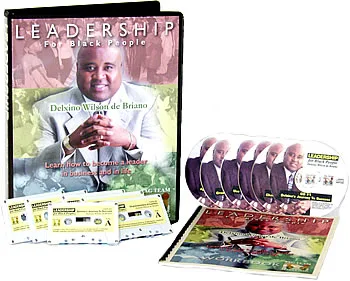
LEADERSHIP for Black People 6-CD Set
Learn How To Become a LEADER In Business and in Life
Want to become a LEADER?
Want to lead others to SUCCESS?
Then get Leadership for Black People and learn key leadership skills that you can use to become a leader inbusiness and in life.
This set simply contains priceless information and has transformed thousands of lives since it was released. This is truly a Blackbusiness classic.
 On The Nickel by Doc Watson
This CD series was specifically developed for the Black community by self-made millionaire Delxino Wilson de Briano. This powerful series features 6 CDs with powerful information and workbook that guides you through the entire course.
Get Leadership For Black People TODAY - only $99.99order now


Before listening to the Leadership for Black People tape series, keeping teams together and motivated was a struggle to me.  The key components that were missing were not keeping the vision and goals of the firm in front of my team daily.
This was crucial information that I learned today.  Making it fun and promoting before selling is very crucial also.  Applying all of these concepts is worth millions for us.  Thank you very much Delxino and family!
L. H.

I have a 6 year old daughter who was born 4 months premature. It was told to me when she entered Kindergarden that the possibility of her ever being able to read, write or even to spell her name was very slim. They even said she wouldn't be able to learn her colors. They stated that she was not mentally retarded but that she had a severe learning disability. That did not set well with me. I knew there was something that could help her.
The first thing that I did was get LEADERSHIP FOR BLACK PEOPLE tape series. We drilled every morning before she went to school. Your a Winner! Your a Champion ! Your Awesome! Your the One! You can learn to spell! You can learn to write! You can learn to read! We did that every day with the series. She began to believe in herself.
At the end of May she was retested and she went past the minimum requirements to become a 1st grader! She is spelling, writing, knows her colors and she is reading. Thank you Delxino!
V. L.

Hi Delxino! How's it going my brother?
Delxino, I listern to Your Beautiful, and Powerfull Voice every single day (Leadership for Black PeopleCD Series)!!! I just want to say Thank you, for putting this Powerful, Educational, Motivational, & Inspirational Product together, so Brothers & Sisters all around the globe can learn, be inspired, and be motivated to take themselves, and their business to a totally new level.
Thanks again brother, both you & Sister Debbie
Love & Peace, Your Brother in Australia.
M. P.

My two teenagers (16 and 18 years old) are usually home when I listen to my Leadership for Black People CD's. Most times, they are not even in the same room with me, but they are listening too...
My 16 year old son used to be so very shy. I truly believe that the Leadership for Black People CD's have helped boost his sefl-confidence tremendously.  He learned how to play the piano a few years ago and would never ever play in front of anyone outside of the small recitals at the music school.  After listening to the Leadership for Black People CD series he started playing the piano at our church on youth day.  Now he will be starting a paid job, playing for a different church once a month!  My 18 yr old daughter is now also playing her guitar in public.
After having six children I always believed in building the self-confidence of my children and letting them know that they were loved and very special.  These CD's provided me with additional information to help me as a parent to help show my children they can achieve more!  Thank you for this powerful information.
D. R.
Get Leadership For Black People TODAYorder now
www.BlackBusinessNetwork.com

AFRICAN NEWS


African firms losing sales due 

to power outages

Rumbidzayi Zinyuke
African companies are losing millions of dollars in lost sales as a result of the persistent power outages that have been affecting most countries on the continent, experts say. The electricity shortages, which have hit Southern Africa the hardest, has in turn diminished the competitiveness of businesses in the region.

As blackouts continue, many companies in the region and beyond have started to feel the impact and true cost that power blackouts have on their operations.

Speaking at a Zimtrade exporters’ conference in Harare recently, international trade expert Dr Jacky Charbonneau said African companies have had to substitute for lack of efficiencies and this has been costing them more.

“The cost of power outage as a percentage of lost sales ranges between 2-3 percent and 9-12 percent which can be quite massive. For those of you who invest in production, you have to invest in generators instead of new machinery or productive machinery. You now have a competitiveness handicap because you have to substitute for the deficiencies of infrastructure and you have to invest capital for those deficiencies,” he said.

He said companies that face such a situation do not have a minimum level of compliance to doing business and cannot remain competitive.
With nearly one billion people, Africa accounts for over a sixth of the world’s population, but generates only 4 percent of the global electricity.

Three quarters of that is used by South Africa, Egypt and a few other North African countries where only 30 percent of the population has access to power.

In some countries, power utilities have been accused of mismanagement and poor oversight while others have not maintained the power stations.

In the case of Zimbabwe, antiquated equipment at most of the country’s power stations have meant the Zimbabwe Electricity Supply Authority (ZESA) failed to meet the 2 200 MW of electricity needed to sustain the country, producing about 1200 MW instead. That figure has been further diminished by the low water levels in Kariba Dam that has forced Zimbabwe and Zambia to cut power generation by at almost 50 percent.

Electricity is one of the key enablers in the economy and its unavailability has had telling effects on all sectors of the economy.

The country’s industry has already been groaning under a series of challenges that included high cost of power, water and an expensive doing business environment which has reduced capacity utilisation for most companies to between 30 and 36 percent.

Production has declined significantly leaving local producers struggling to compete with the cheap commodities that are imported from other countries to cover the deficit.

The increased power outages are bound to put a death nail on these companies.
Confederation of Zimbabwe Industries president Busisa Moyo was recently quoted in the media saying load-shedding would push the few industries that are still to cut back on expansion projects that can create employment.

“We have not computed the cost of the power shortage, but we have seen that the load-shedding schedule has not spared industrial areas like Workington, Southerton and Msasa in Harare, Belmont, Donnington and Kelvin in Bulawayo and Bata in Gweru,” he said.

“The lack of assurance of power will also see more companies laying off workers as they cannot carry a fixed cost without production.”

And the Minister of Energy’s announcement last week that mining companies should cut energy use by 25 percent could have far reaching consequences that could results in another incidence of job losses.

The crisis has also affected the small-to-medium enterprises which account for over 70 percent of employment in Zimbabwe.

Analysts say this could seriously affect the country’s economic growth prospects, which have already been revised downwards to 1,5 percent from 3,1 percent.
The power crisis is not confined to Zimbabwe and Zambia only.

South Africa, which used to be one of the few countries on the continent where most people had reliable access to electricity, has been affected as well.

Experts say a lack of maintenance and investment pushed state-run power provider Eskom Holdings into a crisis where it struggles to meet demand.

These blackouts have threatened to drive Africa’s second-largest economy off a cliff, as mines and factories lose output and foreign investors pull back. As a result, the country’s economic growth has been projected to slow down to 1,5 percent.

The southern African region was, however, warned more than two decades ago that there would be a power deficit. It is the failure to plan ahead for the crisis by governments that has been blamed for the resulting impact.
Dr Charbonneau, however, said the Zimbabwean economy can recover despite the fundamental challenges.

“Zimbabwe is not fundamentally different to many other sub Saharan countries. There are economies who are in a similar geographic environment but are actually doing relatively well, you can take for instance Mauritius, Namibia and Zambia.

“We can argue that we have a dollarised economy, we are dependent on a few export destinations, we are an extraction export business, but still, the fundamentals are pretty much the same. You should talk about common issue like the financial support, infrastructure, governance issues and corruption,” he said.

He said Zimbabwe can leverage on its resources, both human and extractive to counter the effects of reduced competitiveness brought on by problems such as power shortages.
SOURCE: SOUTHERN AFRICAN NEWS

Wednesday, 27 January 2016

AFRICAN NEWS


Writing the Struggle – 

Africa’s instability – look further

 than tribes

What are the root causes of Africa’s instability today? Is it the tribal, cultural or regional differences? Do African intellectuals fully understand the nature of Africa’s problems or they are like Ngugi wa Thiong’o’s character, Waiyaki, in “The River Between”, who went to learn the ways of the coloniser and never returned to his people?

Language defines a culture, a people, a nation and a history.
Yet at the centre of Africa’s demise lies the death of vernacular languages.
The irony today is that while we fight for a return to ourselves, we still use the language of the coloniser. And for Africa, the continent is clearly divided into Francophone and Anglophone zones marking out who speaks what language.

Of course, there has been talk that in order to defeat the enemy, one has to know and understand them. This is what old man Chege in Ngugi wa Thio’ngo’s book “The River Between” tells his son, Waiyaki.

“… Mugo often said you could not cut the butterflies with a panga. You could not spear them until you learnt and knew their ways and movement. Then you could trap, you could fight back… Go to the Mission place. Learn all the wisdom and all the secrets of the white man. But do not follow his vices. Be true to your people and the ancient rites.” p. 20.

For Ngugi, however, and for Africa, most of those who learn the language of the coloniser (including me) have not been able to use it in the struggle and emancipation of their cultures.

Instead, that eagerness to suck up everything led most of us to a point of no return. When we look back at ourselves, we see ignorance, hence, this tight embrace of foreign cultures and languages.

Waiyaki went to Siriana Mission to learn so that he could trap and fight back, but he was trapped and could not fight back.

In sucking up foreign languages and cultures, Africa has not been able to really understand the causes of its instability. Those like Waiyaki never really bother to go deeper into the problems wrecking the continent today. They would rather listen to the colonisers for answers, which they accept without scrutiny.

Take the Congolese problems, for example, which has been blamed on tribal wars. But is it real about tribes? Isn’t there something more sinister at play which the Waiyakis fail to see and understand?

In a chapter in his book “Decolonising the Mind: The Politics of Language in African Literature”, Ngugi writes: “The study of the African realities has for too long been seen in terms of tribes. Whatever happens in Kenya, Uganda, Malawi is because of Tribe A versus Tribe B. Whatever erupts in Zaire, Nigeria, Liberia, Zambia is because of the traditional enmity between Tribe D and Tribe C.

“A variation of the same stock interpretation is Moslem versus Christian or Catholic versus Protestant where a people does not easily fall into ‘tribes’.

“Even literature is sometimes evaluated in terms of the ‘tribal’ origins of the authors or the ‘tribal’ origins and composition of the characters in a given novel or play.

This misleading stock interpretation of the African realities has been popularised by the Western media, which likes to deflect people from seeing that imperialism is still the root cause of many problems in Africa. Unfortunately some African intellectuals have fallen victims — a few incurably so — to that scheme and they are unable to see the divide-and-rule colonial origins of explaining any differences of intellectual outlook or any political clashes in terms of the ethnic origins of the actors . . .”
No wonder why, even when the most educated African leader takes over Government, they end up parroting their former master’s language without making real change that benefit the people.

For some reason, it appears as though the Waiyakis do not fully comprehend the nature and extent of the culture of imperialism. (To be continued)
SOURCE: SOUTHERN AFRICAN NEWS

AFRICAN NEWS

Today just as it was yesterday

When Libya fell and Colonel Muammar Gaddafi murdered, most African leaders spoke about how the continent should have saved the situation instead of allowing it to deteriorate.
There is no doubt that even today with the chaos and the ongoing uncertainty in Libya, Africa is looking back in regret over what should have been resolved the African way.
Over the years, this has been one of Africa’s greatest weaknesses – disunity.
In an informal sequel to his narrative, “Two Thousand Seasons” – “Healers”, Ayi Lwei Armah illustrates how it is easy for Africa to be divided and ruled; to be turned against each other and be controlled; to be lulled into false security and be cheated; and to be made to waste precious time engaged in useless issues while those who control them are busy exploited.
“Healers” is a simple story that unfolds in the nineteenth century when colonialism came to Africa.
Struggles for the control of land break out between the colonialists and the locals in general but it’s the story about Densu in particular.
The war is between the Asantes and the colonialists as well as the Fantes. It’s a war over land.
There is also a parallel story where Densu is framed for the murder of the heir apparent to the Essuano throne.
Ababio does the framing after he fails to push Densu fight for the crown.
Densu does not act according to Ababio’s orders because his eyes are set on becoming a healer as Damfo, the healer’s intern.
Damfo and his daughter, Ajo, live in the Eastern Forest. The healers are seen as protectors.
While all this is going on, at the Cape Coast, the colonialists are using unscrupulous chiefs whom they sweet-talk into surrendering young men as conscripts for the war against the Asantes.
Eleven chiefs ‑ Dahomey, Hausas, Ada, Ga, Aneho, Akim, Ekuapem, Kru, Temne, Mande and Sussu – all give men who fight and defeat the Asantes.
These chiefs are bribed with clothes, whiskey, sugar, wine and various other non-essential stuff to cause disunity among themselves and sell their own.
This also makes Africans aware of the tribal differences among themselves thereby exacerbating conflicts on the continent while foreigners are busy looting.
When the Asantes are defeated, they turn their anger against the healers, accusing them of betrayal.
So rewind to 2012, and ask yourself whether there has been any change in the modus operandi of the colonialists.
Let’s go to Malawi.
Joyce Banda plays against the whole African team for what she says is for the benefit of her nation.
She is not the first one though regarding Malawi.
The mighty Kamuzu Banda too never had anything to do with southern Africa, opting to work with apartheid South Africa when that regime was under sanctions.
While other leaders were helping free the region, Banda was busy shutting his borders to people running away from wars in the region.
Although colonialists no longer use cheap non-essential stuff, they promise aid money.
The Asante queen mother sums up the situation then and now: “The wisdom of a king lay in knowing at all times what to do to remain a king.
“If what should be done now was to yield a bit to the whites, better that than lose all power to an upstart general,” (Page 331).
In short, Armah says Africa is not united today because of greedy leaders who look at Europe for help; leaders who have no strategy to empower their people and choose to rely on handouts and because of leaders who are scared of upsetting their erstwhile masters.
But Armah says all is not lost. There are leaders like former South African president, Thabo Mbeki, who see beyond the US dollar, who are talking about the African renaissance.
There are leaders such as President Robert Mugabe who believe in black empowerment.
These are the healers Africa needs at this moment in time to restore the continent’s lost integrity.
But such ‘healers’ are hated by those ‘kings’ who still believe in the power and magic of the ‘colonialists’.
In conclusion, people like Mbeki and Mugabe will not be appreciated now; but future generations will certainly turn back and ask why such healers were not heeded.
SOURCE: SOUTHERN AFRICAN NEWS

AFRICAN NEWS


How Africa helps maim, kill herself

Every African season is either bloody or deadly. There is never a time when Africa enjoys a peaceful season. The end of one war has heralded the beginning of another.

Examples of this abound. Look at the so-called Arab Spring and its after-effects. Look at the endless Congolese blood-letting. Look at the suicidal Somalia. In all these cases, we lead in our own destruction while foreigners follow.

We create our own two thousand seasons of self-hate, self-annihilation and self-exploitation.

And Ghanaian author Ayi Kwei Armah sums this up well in his narrative “Two Thousand Seasons”, an epic story of how Africa has contributed to her suffering and exploitation saying:
“Woe the race, too generous in the giving of itself, that finds a highway not of regeneration but a highway to its own extinction.”
The narrative is set in a nameless African country and starts with the coming of the “predators” who are harbingers of the country’s ruin.

There are Arabs first followed by Europeans and always they link up with weak Africans who easily and generously give themselves.

The pioneer predators come as beggars attracting pity and sympathy from locals but they cunningly use their religion to mislead and hold hostage the locals who, in turn, are used against their own.

Gradually, the locals are stripped of any character thereby becoming zombies or what Armah calls “white desert-men’s dogs”.

Turning the locals against their religion and culture, Armah says, is capturing the mind and the body into a slavery that lasts more and forever than the mere capture of the bodies.

Once the mind and the body have been captured, the African is left with no means of fighting back and the only solution is running away hoping “that new places, new circumstances might bring us back to reciprocity, might bring us closer to our way, the way”.

In the event where a few, yet to be captured, Africans resist, the predators retreat into the desert only to return stronger and in greater numbers.

The locals’ situation is no better because of lack of leadership, which is greedy and ready to give in in exchange of crumbs.

One such king in the narrative is Koranche who is described as, “The quietest king, the gentlest leader of the mystified, is criminal beyond the exercise of any comparison.”

After the Arabs – predators – come the destroyers from Europe.

Unlike the Arabs, the white men is armed and determined to have their way. They have no time for negotiation or listening to the locals.

“There is nothing white men will not do to satisfy their greed,” Armah notes adding: “Monstrous is the greed of the white destroyers, infinite their avarice.”

Of course, as part of the destroyers is the missionary with a different kind of religion, which will further poison and subdue the locals who, in turn, will destroy their societies.

Armah writes despite ‘the treachery of chiefs and leaders, of the greed of parasites that had pushed us so far into the whiteness of death’ all is not lost.

Once in a while, a voice of sanity emerges in the calm chaos of silent destruction. For Armah, that voice is Isanusi, the old man who is mocked and called mad because he still clings to the African way. He is imprisoned when he speaks against the destroyers.

Nobody listens to him when he warns the people of the greedy king’s intention of selling them off to slave traders. Only those who escaped from the slave ship live to recall Isanusi’s words but it was too late to return.

That we are still wasting our two thousand seasons wandering in the maze of our confusion as the narrative says is of no doubt.

Look at Africa today and see leaders who are leading their people the wrong path.
They are encouraged and urged by their benefactors – the Arabs and the Europeans.
In the eyes of these benefactors, such leaders are rewarded and praised while those who stand by their people and call for a return of African lands and culture are called despots.

The narrative also sums up what is happening in ‘liberated’ countries where whites still enjoy the fruits of the stolen lands and wealth.

Below is what Isanusi tells people: “. . . These white men, they do not want to be part of us. But here they have come claiming they have crossed the sea from wherever it is they come from just to do us good. They are pretenders. They are liars.
We have asked them for nothing. We should not have let them come among us. They have no desire to live with us. They will live against us.” (153-154)
SOURCE: SOUTHERN AFRICAN NEWS